In short
- Woodland asks for a real boot. Over the ankle, with a deep-cut sole that bites into mud, and laces you can pull tight.
- Indoors, lighter is better. On concrete a light mid-height shoe with a grippy rubber sole beats a heavy leather boot.
- Waterproof has a price. A waterproof lining keeps rain out, but it is warmer and dries slowly once water comes in over the top.
- Surplus can be a bargain. British issue boots are built to last, but a used boot has shaped itself to someone else's foot.
- Never debut boots on a game day. Wear new boots at home and on short walks first, with the socks you will play in.
Why boots matter in airsoft
A skirmish day is hours of sprinting, kneeling and standing still on ground nobody has swept: roots, bracken, wet leaves, rubble. Your gun gets the attention, but your feet do the work. Sore, soaked or sliding feet end a day sooner than an empty magazine.
That makes tactical boots one of the first things worth buying after eye protection, well before a second gun. It also means the question is not "which boot is best" but "what is under my feet": a boot that is right for a winter woodland is wrong for a sports hall.
The ground chooses the boot
Where do you play?
An indoor hall on concrete
A light mid-height shoe with a grippy sole
You sprint, stop and turn on a hard floor. Low weight and a flat, soft rubber sole matter more than waterproofing.
Boots in the webshopWoodland in all weather
A waterproof boot over the ankle
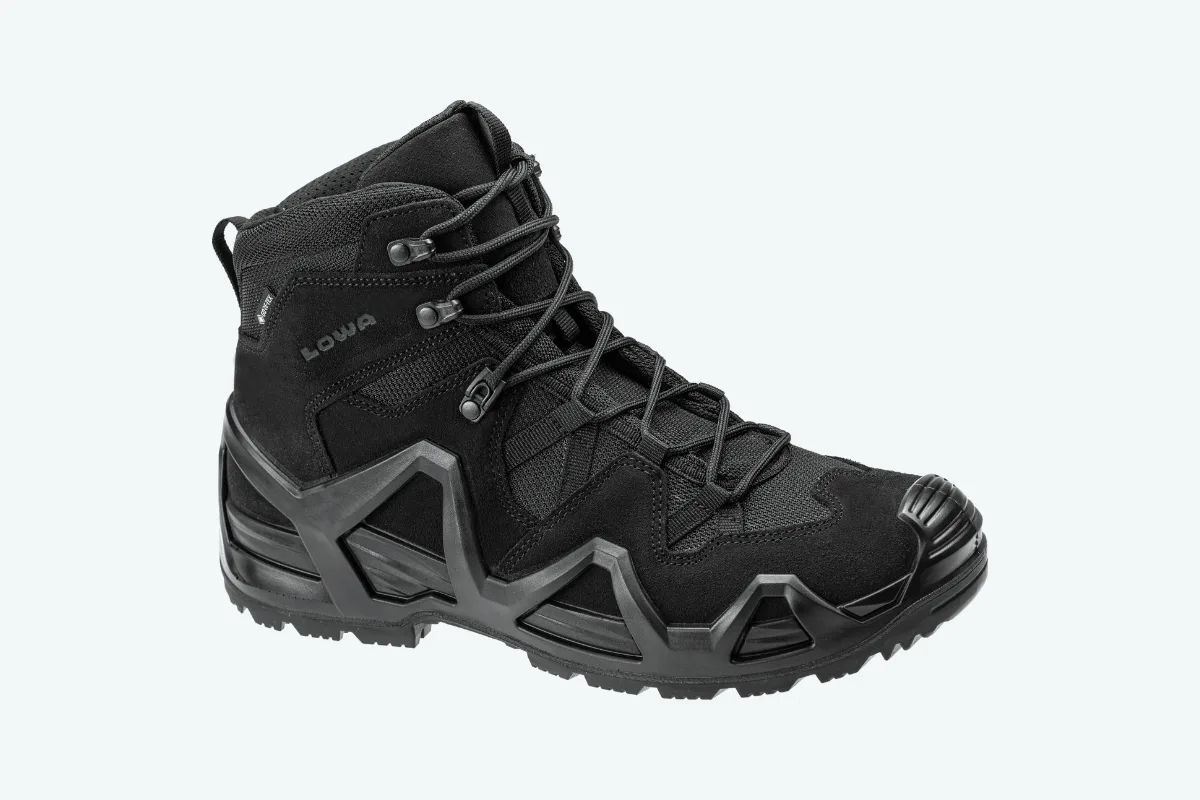
Mud, puddles and slopes: take a high boot with a deep-cut sole and a lining the maker sells as waterproof.
Boots in the webshopA mix of both
A mid-height tactical boot
High enough to keep mud out, light enough for buildings. The all-rounder, if its sole has a real profile.
Boots in the webshopSummer days only
A breathable boot without a lining
In dry, warm weather an unlined boot of fabric and suede stays cooler and dries fast after a wet patch.
Boots in the webshop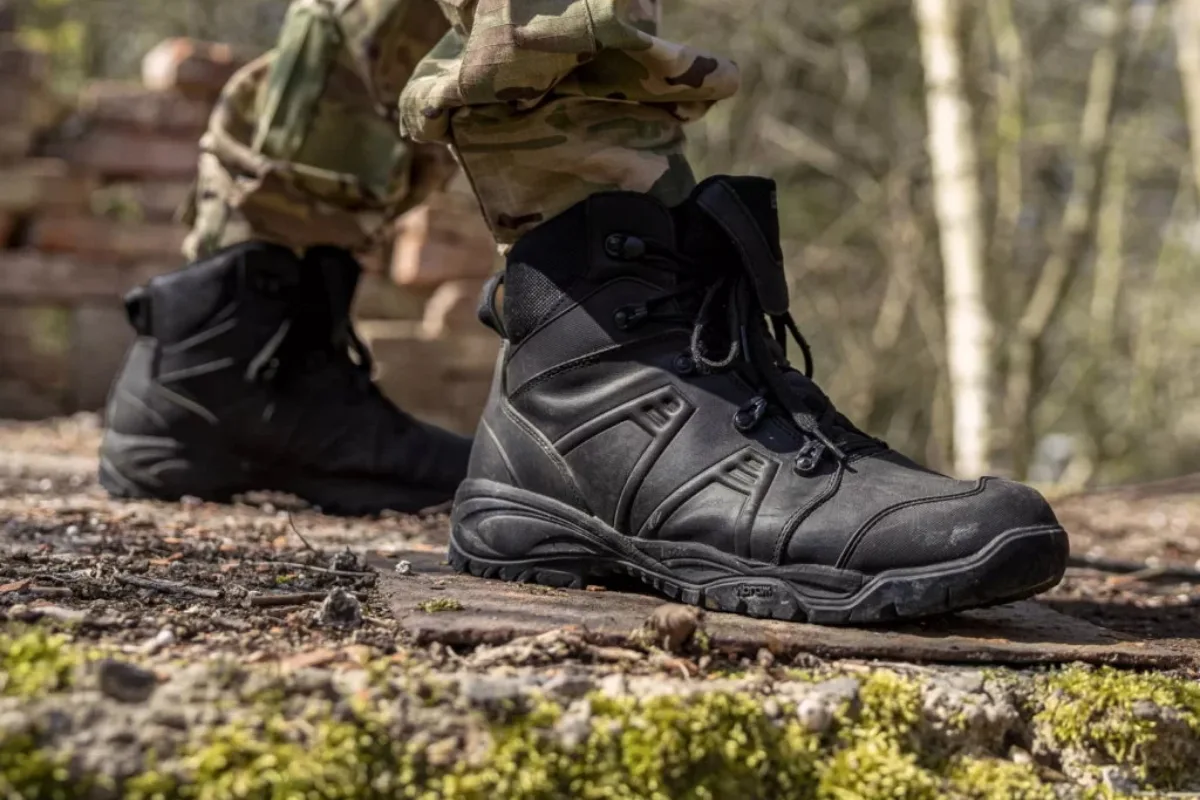
Ankle support and soles
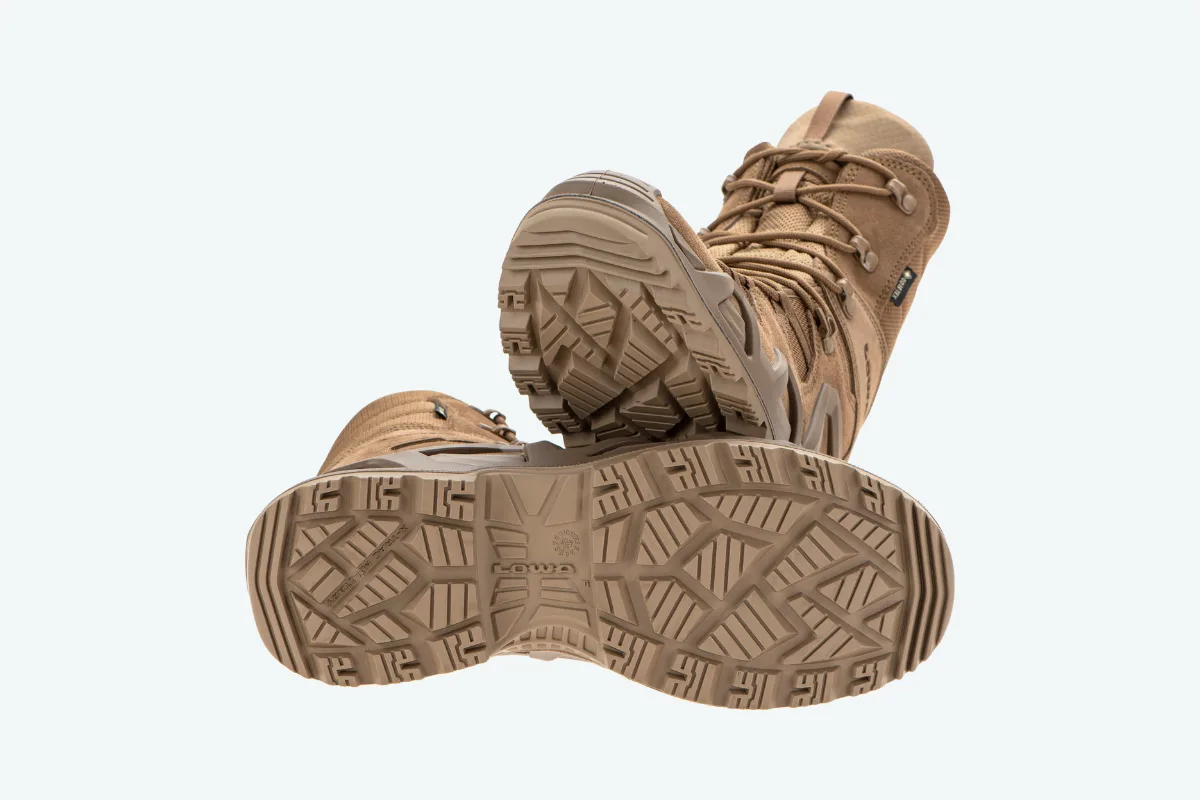
Two parts of a boot decide how it behaves on rough ground: the shaft, the part above the foot, and the sole. A shaft that reaches over the ankle and laces firmly holds your foot steadier on roots and slopes, and it keeps mud, twigs and stray BBs out. The sole decides whether you stay upright when you stop on wet clay.
The parts of a boot in plain words
- Shaft height
- Low (below the ankle), mid (just over it) or high (well above it). Higher holds more and weighs more.
- Lugs
- The blocks of the sole. Deep, widely spaced lugs grip in mud and shed it; shallow ones grip on floors.
- Midsole
- The layer between your foot and the outsole. Stiff carries you over stones, soft is better for sprinting.
- Rand
- A rubber strip around the toe and sides that takes the scuffs of kneeling and crawling.
- Lace hooks
- Open hooks at the top: quicker to lace, and they let you tighten the ankle separately from the foot.
Waterproof or breathable
A waterproof boot has a membrane inside: a thin layer between the outer material and your sock that stops water coming in and lets some sweat out. Makers name it in the product details, often in the model name as well. Without a named membrane a boot is water-repellent at best: fine in wet grass, not in a stream.
Breathable boots leave the membrane out. Your feet stay cooler, and when the boot does get soaked it dries overnight instead of in days.
A waterproof membrane: for and against
Pros
- Dry feet in rain, wet grass and shallow puddles
- Warmer on cold days, because wind and water stay out
- The right choice for British woodland from autumn to spring
Cons
- Warm in summer and indoors
- Once water runs in over the top, it stays in
- Dries slowly, so a soaked pair may still be damp next weekend
Indoor versus woodland
What the ground asks of your footwear
| Ground | Ankle support | Sole | Waterproof or breathable |
|---|---|---|---|
| Indoor hall on concrete | Low or mid is enough | Flat, soft rubber | Breathable |
| Buildings and yards outdoors | Mid | Shallow blocks, firm underfoot against rubble | Either |
| Dry summer woodland | Mid or high | Deep blocks | Breathable |
| Wet woodland, autumn to spring | High | Deep, widely spaced blocks | Waterproof |
| Sites with a bit of everything | Mid | Medium blocks | Waterproof, unless you only play in summer |
Close-quarters play in buildings (CQB) is where ordinary shoes get by. Trainers with a sound sole work on a dry indoor floor, though floors strewn with BBs are slippery under any sole, and a thin mesh upper does nothing against a table leg. Outdoors the answer changes at the first muddy slope.
Three kinds of footwear on a woodland day
- Surplus army boots
- Light tactical boots
- Shoes you own
-
Ankle support
- Surplus army boots
- 5 out of 5
- Light tactical boots
- 4 out of 5
- Shoes you own
- 2 out of 5
-
Grip in mud
- Surplus army boots
- 4 out of 5
- Light tactical boots
- 4 out of 5
- Shoes you own
- 2 out of 5
hiking shoes score higher than trainers
-
Staying dry
- Surplus army boots
- 4 out of 5
- Light tactical boots
- 4 out of 5
- Shoes you own
- 1 out of 5
with a membrane; leather needs care to keep water out
-
Low weight
- Surplus army boots
- 2 out of 5
- Light tactical boots
- 4 out of 5
- Shoes you own
- 5 out of 5
-
Ready without breaking in
- Surplus army boots
- 1 out of 5
- Light tactical boots
- 4 out of 5
- Shoes you own
- 5 out of 5
British issue boots and army surplus
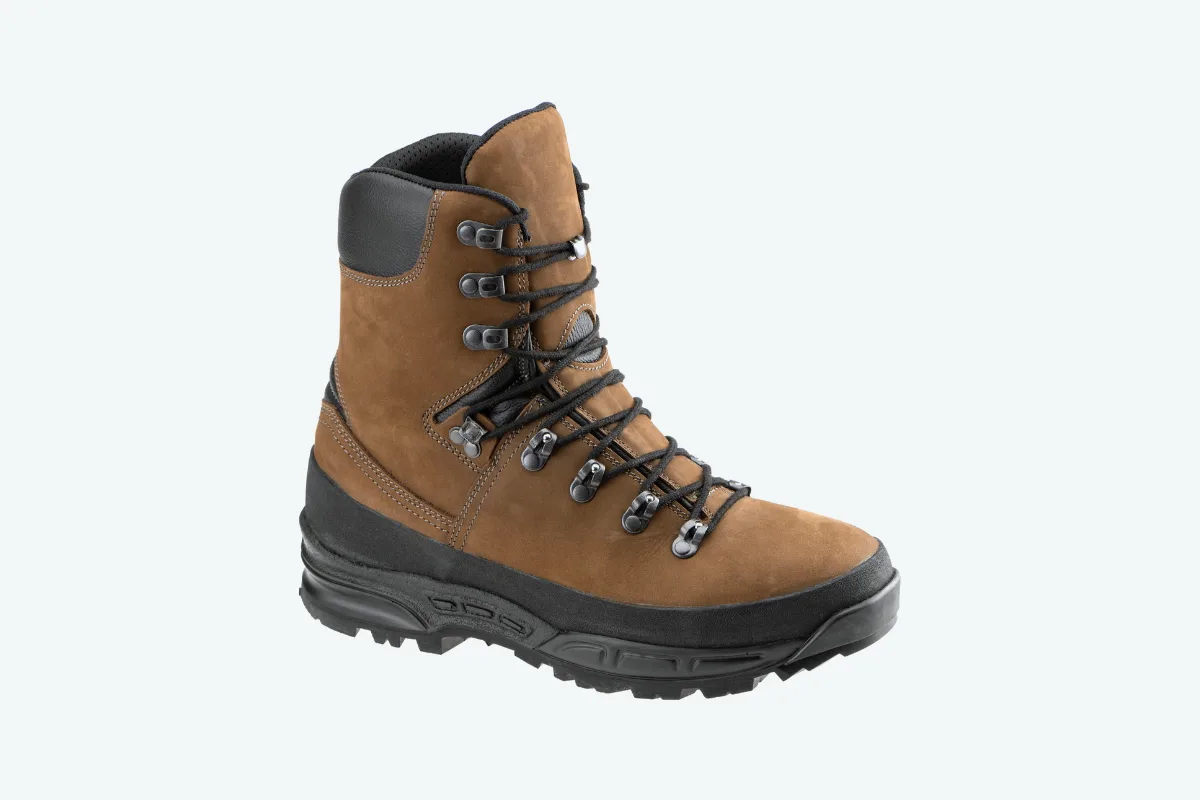
British army surplus is the classic cheap way into a serious boot. In 2012 the Ministry of Defence chose a range of brown boots to replace the old black ones, in several types for different climates, and both generations reach the surplus trade: unissued, lightly worn or well used. Altberg and Haix are names you will often see on the labels.
The honest side: an issue boot is a heavy leather boot made for carrying loads, and a worn one has shaped itself to another foot. Buy on condition, not on reputation. The same goes for the used footwear on our marketplace, where barely worn boots in the wrong size are the ones to look for.
- types of boot, from desert to cold wet weather
- 5
- styles of each type for a soldier to choose from
- 2
- width fittings, to suit the feet of men and women
- 2
- troops wore them in trials before the choice was made
- 2,000
Source: Ministry of Defence, "Deal signed for new combat boots", 23 July 2012
Check surplus and second-hand boots
0 of 6 ticked
Fit and breaking in
Try boots on with the socks you will play in, ideally wool or a wool blend, and later in the day rather than first thing. Your toes should not touch the front when you walk downhill, and your heel should not lift when you walk up. Leather boots then need time to bend where your foot bends. When rain is forecast, wear your combat trousers over the top of the boot, not tucked into it, so water runs past the boot instead of into it.
Break in new boots in four steps
-
Wear them indoors
A few evenings around the house, laced as you would for a game. You learn where they press while you can still take them off.
-
Lace them properly
Push your heel to the back of the boot before you pull the laces tight, firm but not tight over the top of the foot. That is the advice Altberg gives for its issue boots.
-
Walk, then walk further
Short walks first, then an hour on grass and slopes. Add distance only when nothing rubs.
-
Then play a half day
Take your old shoes along to the first game day as a way out. After two or three outings the boots are yours.
Four boot myths
Myth
Waterproof is always better.
Fact
A membrane is warm and dries slowly. In summer and indoors a breathable boot is the better tool.
Myth
Army surplus is always the best value.
Fact
Only in your size and in sound condition. A tired sole or a boot shaped to another foot is no bargain.
Myth
New boots can go straight to a full game day.
Fact
Stiff leather and a long day are how blisters start. Break them in first.
Myth
Indoors any trainer will do.
Fact
A worn, smooth sole slides on dust and BBs. Check the grip before you check the looks.
Picks per budget
The boots you own
Walking boots with a deep sole are fine for a first season in the woods. Trainers are for dry indoor days only.
Surplus or an army-pattern boot
Full leather, high shaft, deep sole. Heavy, hard-wearing and slow to break in.
Used footwearA light tactical boot with a membrane
Suede and fabric, a cushioned sole and a named waterproof lining. Comfortable from the first week.
Boots in the webshopBoots in the webshop
In stock today, with the prices of today.
In stock, ships right away
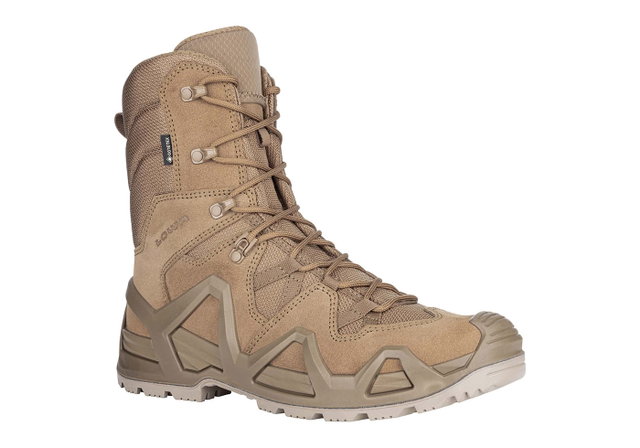
Zephyr Mk2 GTX Hi TF — CoyoteNobody remembers the boots of a good game day. Everybody remembers the boots of a bad one.
Frequently asked questions
What boots should I wear for airsoft?
Boots that match your ground. For woodland: over the ankle, with a deep-cut sole and laces you can pull tight. For indoor sites: a light mid-height shoe with a grippy rubber sole. Walking boots you already own are a fine start outdoors.
Do I need waterproof boots?
For British woodland between autumn and spring, yes: wet grass alone soaks an unlined boot in an hour. For summer days and indoor sites a breathable boot is cooler and dries faster. A boot is waterproof only when the maker names a membrane.
Are army surplus boots good for airsoft?
They can be: issue boots are sturdy leather boots made for rough ground. They are also heavy, and a worn pair has formed to another foot. Check the sole, the leather and the size label, and expect to break them in.
Can I wear trainers for CQB?
On a dry indoor floor, yes, if the sole still has grip. Loose BBs make any floor slippery, and a mesh upper gives no protection when you knock into furniture. For outdoor sites with mud or rubble, wear boots, and add the rest of your tactical gear later.
How do I break in new boots?
In stages: a few evenings indoors, then short walks, then an hour on rough ground, all in the socks you will play in. Only then a game day, with spare shoes in the car. Leather boots need this more than light fabric ones.
Which boots give the best ankle support?
High leather boots with lace hooks, laced firmly: the army pattern. A mid-height tactical boot holds less but weighs less. Whatever the height, the boot only supports you when it fits and is laced with your heel at the back.
Sources
- Deal signed for new combat boots, 23 July 2012 Ministry of Defence, GOV.UK, 12 November 2026
- UK MOD Defender boots fitting advice Altberg, 12 November 2026
- Where do Altberg make their boots? Altberg, 12 November 2026
- Zephyr MK2 GTX Mid, product page LOWA Professional, 12 November 2026
- Exchanges and returns Airsoft Bazaar help centre